Living with spina bifida, Scott Hughes (his friends call him Wheelz) turned to Help Hope Live in 2025 to start fundraising for a key mobility need: an adaptive van.
Scott is a proud dog dad to beautiful Karma, a gamer, a Star Wars and fantasy fan, and a comedy-lover who always has a joke at the ready.
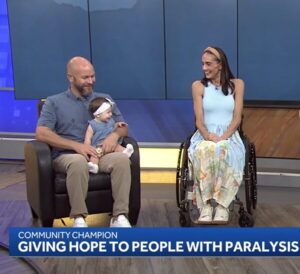
We loved the way he talked about his life experiences and fundraising with us in a 2026 interview with his local news, so we reached out to get even more of his story this Mobility Month.
Learn why Mobility Matters to Scott, some of the experiences that made him who he is, and why he sometimes thinks his wheelchair is out to get him.
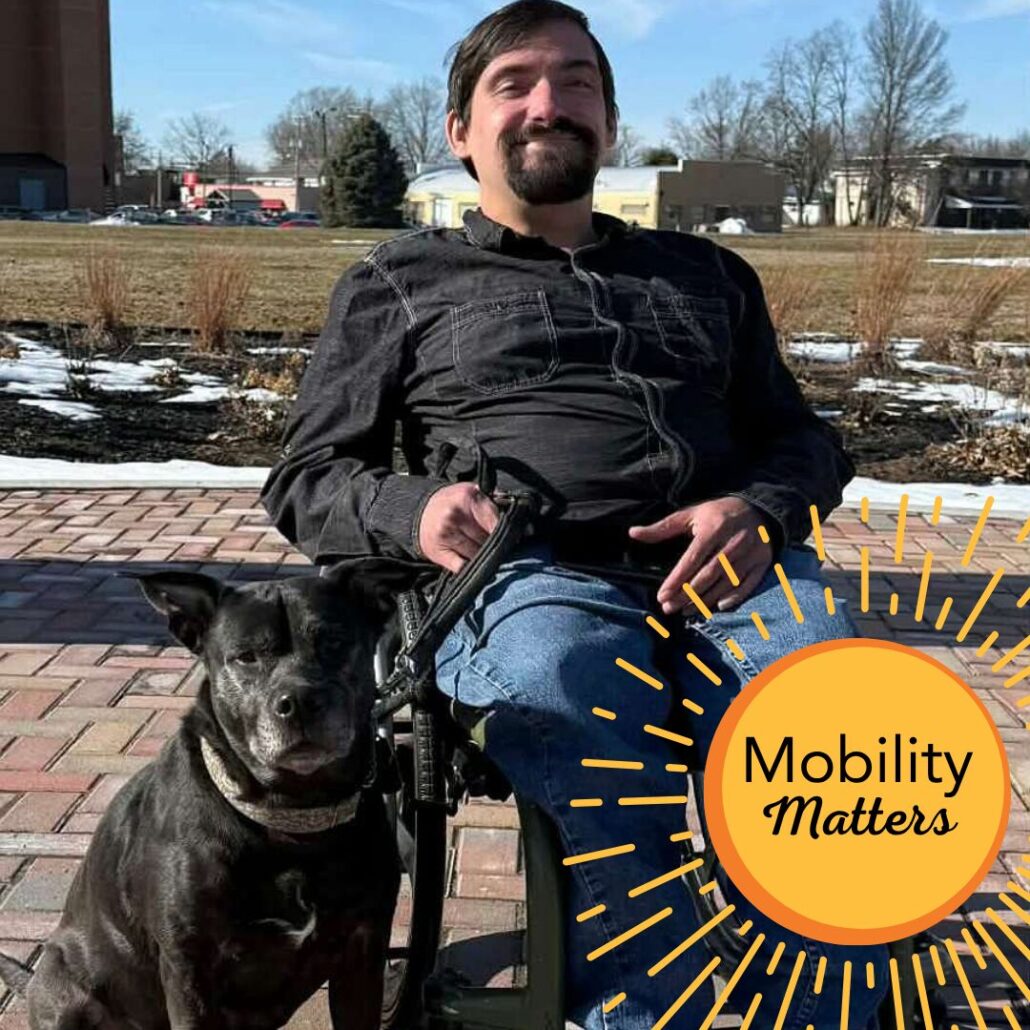
Tell us about your upbringing and how it shaped who you are today.
I was your typical, normal, bratty kid. I got in trouble. I got dirty.
From the time I was old enough to understand my disability, my family made sure to always treat me like everyone else. They helped me to navigate my disability and function by myself if I got hurt.
Over time, I learned that actions have consequences, even when you’re disabled. I learned what to do and what not to do.
If I could do something myself, I had to. That’s how I learned.
I was teased sometimes—kids always pick on what they don’t understand. But I made the better jokes about my own disability, so that made them stop!

I love comedy, especially 90s movies like Major Payne, Uncle Buck, and Planes, Trains & Automobiles and shows like American Dad, Family Guy, and King of the Hill.
My love of Star Wars grew from watching the movies with family and friends.
I mean, Yoda is 2 feet tall, walks with a cane, and he can whip most any Sith. That’s proof you should never judge a book by its cover.
Yoda looks old and frail, but he’s one of the strongest and wisest of them all.
My love for fantasy grew the older I got. As a video gamer, I could beat up criminals as Batman. I could hunt dragons in Skyrim. It really opened up my world.
As graphics and games got better, the storylines helped me to live outside of my limitations.
I don’t require any special equipment for gaming, but I’ve seen some really amazing technology that’s designed to help anyone become a gamer if they want to game.
Ultimately, I was raised to believe you have 2 options. One: you can let go of everything you can’t do, because you’re not built for this world, and live a life that’s gloomy and sad.
Or two: you can look at the positives. That’s the one I choose.
I never get leg cramps. I always win at musical chairs. I always have a place to sit, wherever I am.
My life growing up could’ve been a lot worse, so I choose to stay positive.

How early did mobility devices become a routine part of your life with spina bifida?
I got my first wheelchair when I was a year old. Motivation is key for kids, right? Well…
My mom told me that if I could catch her in my wheelchair, I could run her over with it.
Apparently her shins were bruised by the end of the day. As I grew bigger, so did my wheelchairs, just like kids and their shoes.
I call my wheelchair Christine—some days, I swear its trying to kill me.
But we’ve come to an understanding: if it doesn’t hurt me, I won’t turn it into scrap metal.
When I turned 28, I bought a set of hand controls online, and my brothers, sisters, and dad taught me how to drive.
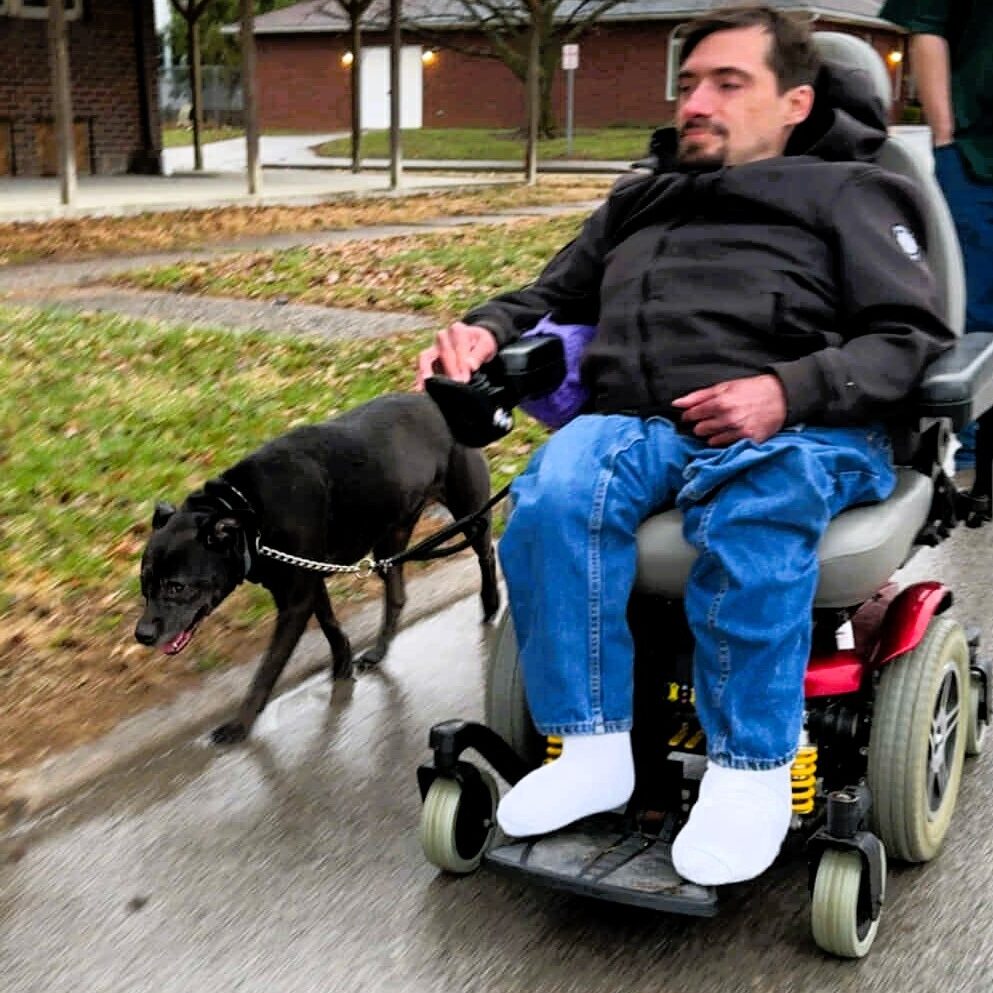
How did you meet Karma?
Karma was a friend’s dog that they acquired for breeding purposes, but she wasn’t a good listener, and they were planning to take her to the pound. Once they saw how me and Karma hit it off, they asked if I wanted her.
She doesn’t listen to me, either. But we have a bond. I love her just like I would love a biological child.
I know she loves me, too. When I’ve had a rough day, she brings me happiness.
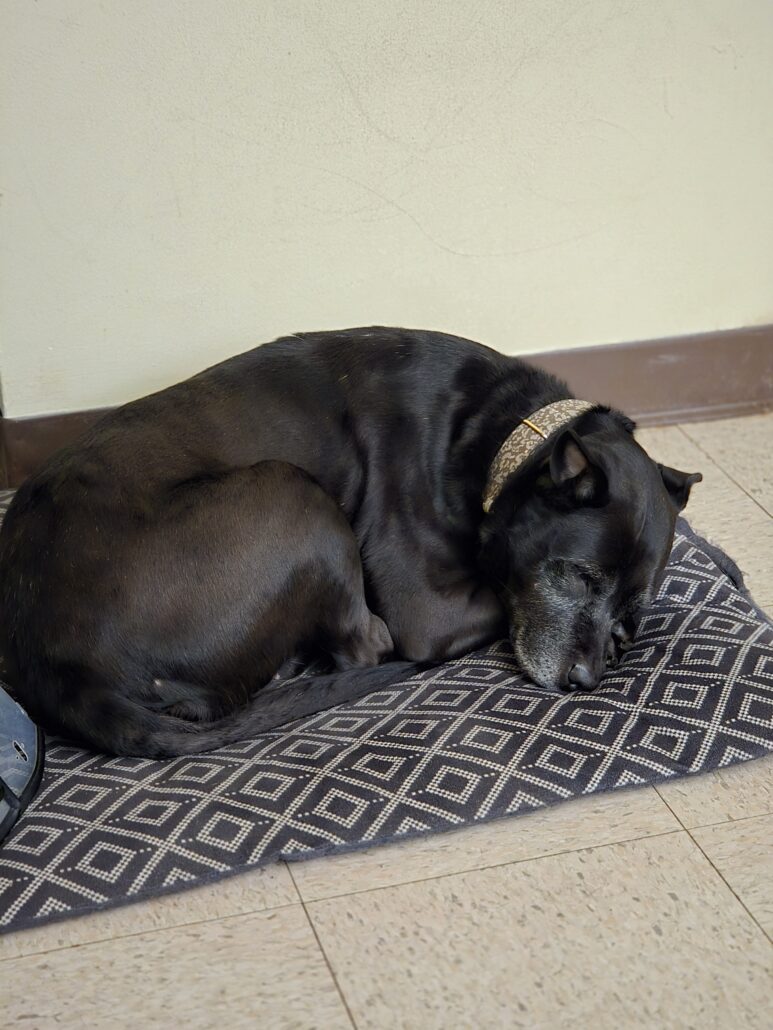
Tell us about an average day in your life.
When I get up, I take Karma outside to potty. I come back in and take care of my own business. After that, I get ready for my day—I shower, get dressed, and either binge-watch something on TV or take Karma for a walk if it’s nice out.
I have an aide throughout the week who helps me with sweeping, cooking, and laundry. After she leaves, I’ll relax and watch a show or play a video game with Karma laying beside me.

I worked at a local Goodwill thrift shop for about 6 years.
I got the job through vocational rehabilitation with my case worker, Victoria, who taught me how to dress and prepare for an interview. The person who hired me, Meredith, went on to become the CEO of the Wabash Valley Goodwill.
A typical day at my job involved putting donations we received out onto the floor displays with my co-workers, running the registers, and helping customers however I could.
I loved my job, because of the people. I had amazing co-workers, an amazing boss, and amazing customers. My boss never gave up on me, even when I screwed up, which was a lot!
What I truly loved most about working was just working.
It gave me a sense of purpose. I was doing something productive with my life. I wasn’t just sitting at home anymore. I was making money.
My dream job would be to help other people find resources that make it easier to live, not just survive.
Being disabled for most people, especially those who are less fortunate, is just survival.
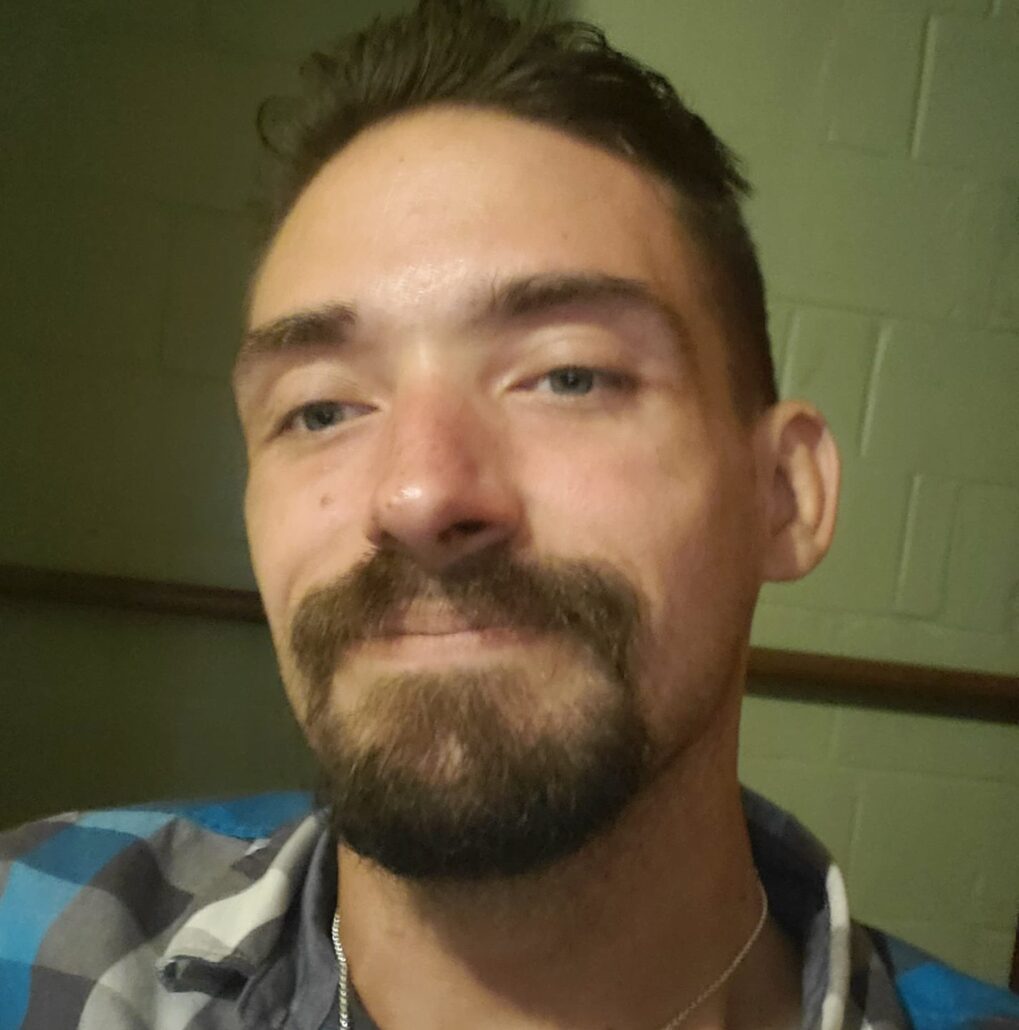
Did mobility play a role in why you stopped working?
I had to stop working because my body started to break down. I got sick, had to go to the hospital for treatment, and spent a year in bed. Over that time, my muscles started to weaken from not being active.
As I get older, it’s a lot harder to get back strength once I’ve lost it. I’m not strong enough to return to the job I had.
Transferring from my wheelchair to a traditional vehicle has gotten more difficult. That really limits how much I can move around. I would have to lift my wheelchair into the passenger’s seat from the driver’s seat to keep using my current vehicle.
A lot of people don’t know that small towns don’t always have public transportation or accessible transportation. If they do, they may also limit the times when these paid services are available to you.

If something comes up and you can’t catch your ride, you still get charged for the service.
On the other hand, a lot of upper body strength is required to get into a standard car when you use a wheelchair, and if you don’t practice, you fall on your butt.
The car has to have room for the wheelchair inside, or room in the trunk, plus someone who can load it in if you can’t do it yourself. That makes coordinating any outing more difficult.
My personal vehicle is an SUV made possible through a friend. Being on a limited income, it makes it difficult to afford truly accessible transportation.
At the moment, if something comes up and the person helping me can’t make it to assist with transportation, I have to reschedule my whole day.
If I want to go out, or hang out with friends, I have to have someone come to pick me up and leave as soon as they’re ready to leave. It’s like going on a date with your parents.
I’ve had to start learning how to be on my own. Otherwise, you’re navigating around someone else’s wishes, what time they need to leave, and their availability.
You’re always “that guy” in need of a ride and assistance, right in the middle of the plans. Being close to 40 and feeling that way isn’t fun.
With an accessible vehicle, I could roll my wheelchair directly into the driver’s seat.
I’d be able to return to work since I could get in and out of my own vehicle without needing to rely on anyone else for assistance. I could go to the grocery store alone, to doctor’s appointments, take Karma on trips, and travel anywhere else I wanted to.

What made you start fundraising with Help Hope Live?
With Medicaid, I haven’t run into too many uncovered costs for medical equipment.
However, I can only make a maximum of $2,000 per month. If I exceed that, I lose my coverage.
Without that coverage, even something simple like a box of catheters would cost me over $30 a box every 2 weeks. All the small costs would add up to a huge burden.
When I was looking into getting a wheelchair vehicle, the company I was working with told me about Help Hope Live.
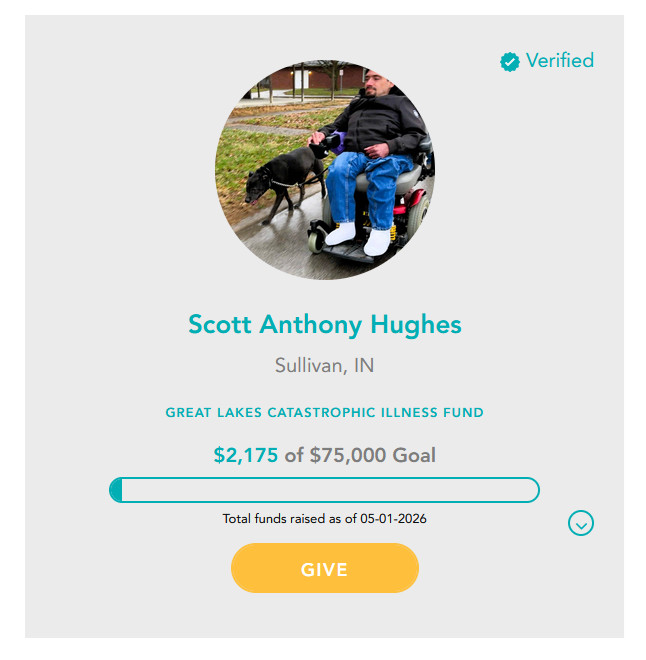
They told me Help Hope Live helps people fundraise for medical necessities that Medicaid and Medicare won’t cover.
Being disabled is expensive. One frustrating thing about accessible transportation is that in most states, it is twice as expensive as regular transportation. Imagine you are purchasing a 2010 vehicle:
For an able-bodied person, you’re looking at $5,000 to $6,000. For a disabled person, it’s $20,000 to $30,000.
I knew that with GoFundMe, funds raised could count towards my income cap and affect my benefits. With Help Hope Live, the funds would be part of a campaign in my honor, not a personal bank account.
It was hard to start. I hate asking for help with anything, because I know there are people out there who are way worse off than me.
However, I had to face the fact that I can’t do this myself. Asking for help was my only option.
The only accessible vehicle options out there are extremely expensive, and I can never get my independence without one.
It’s hard for potential donors to trust anyone asking for help anymore. Way too many people have been scammed out of money by fundraisers faking a sickness or homelessness.
Working with Help Hope Live has helped a lot, particularly with the platform’s medical verification process.
I want to personally thank every person who donates. They don’t have to do that, but they are: they are putting their hard-earned money towards helping me through Help Hope Live. No matter the amount, it’s something to be grateful for. I feel truly blessed.
Every penny that gets donated in my honor is meaningful to me.

What does the word “hope” mean to you today?
Hope is going out and doing the regular stuff that people do. Going to work. Hanging out with friends. Taking Karma somewhere for a trip.
Hope is the simple dream of living and not just surviving.
With all I’ve said, I want to take a moment to remind people to be kind. You never know what a person is going through. They may be smiling on the inside but masking pain or insecurity underneath.
Be kind to everyone. You never know someone else’s life or how close they’ve come to giving up.

You can make a donation in Scott’s honor at helphopelive.org and follow his adventures on Facebook and TikTok.